
Japanese pronunciation: ろくろ (rokuro)
| Category | Cookware |
|---|
A rotating wheel that shapes clay into unfired vessels for finishing and firing.
Obtaining
Usage
Supply and collection
Put materials in the supply slot on the left. The amount needed for the selected shape moves automatically into the central working grid; collect the unfired vessel from the output on the right. You do not need to place clay directly in the working grid. Hoppers supply materials from above or the sides and collect products underneath.
Enable or disable working slots to choose a shape
First empty the central working grid, then left-click slots with an empty cursor to enable or disable them. All slots start enabled; brown slots marked with a cross are disabled. Leave only the slots shown in a diagram enabled, then put clay balls into the supply slot on the left. Once the required amount is ready, shaping starts automatically and an unfired vessel appears on the right.
Use the full grid for a platter, an adjacent square for a small plate, or a V formed by two outer slots and the centre slot immediately below for a bowl. Diagrams follow the screen from top to bottom and left to right. Disable every other slot. Small plate shapes can move to any corner; the bowl shape can move down one row. Rotated shapes do not work.
Unsupported layouts do not draw clay from the supply. Empty the working grid before changing its shape. Fire the resulting blank in a kiln with glazes, pigments or other finishing materials to make the finished vessel.
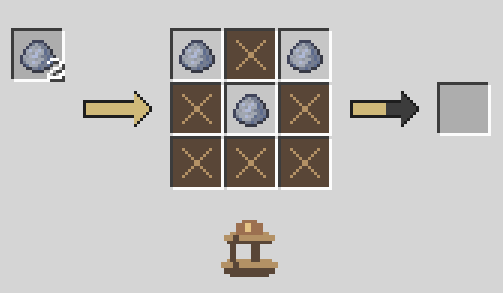
● Enabled (automatically filled) / × Disabled (leave empty)
Unfired Earthenware Bowl × 1
Material: Clay Ball × 3
| ● Enabled | × Disabled | ● Enabled |
| × Disabled | ● Enabled | × Disabled |
| × Disabled | × Disabled | × Disabled |
| × Disabled | × Disabled | × Disabled |
| ● Enabled | × Disabled | ● Enabled |
| × Disabled | ● Enabled | × Disabled |
Unfired Earthenware Small Plate × 1
Material: Clay Ball × 4
| ● Enabled | ● Enabled | × Disabled |
| ● Enabled | ● Enabled | × Disabled |
| × Disabled | × Disabled | × Disabled |
| × Disabled | ● Enabled | ● Enabled |
| × Disabled | ● Enabled | ● Enabled |
| × Disabled | × Disabled | × Disabled |
| × Disabled | × Disabled | × Disabled |
| ● Enabled | ● Enabled | × Disabled |
| ● Enabled | ● Enabled | × Disabled |
| × Disabled | × Disabled | × Disabled |
| × Disabled | ● Enabled | ● Enabled |
| × Disabled | ● Enabled | ● Enabled |
Unfired Earthenware Platter × 1
Material: Clay Ball × 9
| ● Enabled | ● Enabled | ● Enabled |
| ● Enabled | ● Enabled | ● Enabled |
| ● Enabled | ● Enabled | ● Enabled |
Recovering work in progress
Removing part of a working set cancels that batch. Recover its remaining materials before starting another. Restocking the supply does not alter work in progress.
Visible processing
Working clay is visible on the upper disc. Both the process diagram and the wheel show the discs, connecting uprights, and clay turning while shaping, with the base staying still. Rotation stops when paused. The unfired vessel replaces the clay until collected, leaving an empty disc.